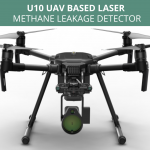
Drone Methane Detection: How to Find Leaks at Oil and Gas Facilities
A methane survey should give a maintenance team somewhere to start: a suspected source, its location and enough evidence to plan a closer inspection. An aerial image alone cannot do that. The drone needs a sensor that can detect methane, and the inspection needs a clear route from the first reading to a verified repair.
Drone methane detection helps operators inspect pipelines, storage facilities and equipment that is difficult to reach from the ground. Its value depends on choosing the right measurement method and understanding what the results actually show.
How does drone methane detection work?
The aircraft carries a gas detection payload and records measurements alongside location and time. Two approaches are particularly relevant to equipment:
- Remote laser detection uses light at wavelengths absorbed by methane. A sensor measures absorption along the laser path, allowing the operator to investigate a suspected release from a distance.
- Local air measurement measures gas reaching the sensor’s sampling inlet. The result describes conditions at the sampling location, so flight planning must account for where the wind carries the plume.

Both approaches require interpretation. An elevated reading identifies methane in the measurement path or sampled air; further inspection may be needed to identify the leaking component.
Can a thermal drone camera detect methane?
A standard thermal drone camera can help inspectors identify overheating equipment, insulation defects and unusual surface temperatures, but it generally cannot show methane escaping from a pipe or valve.
Optical gas imaging (OGI) cameras use specialized detectors and spectral filters to make gas plumes visible against their surroundings. A camera configured for methane can help an inspector trace a plume towards its source and identify equipment that needs closer investigation. Visibility still depends on conditions, including the contrast between the gas and its background, viewing distance and wind, which can disperse the plume.

Methane detection equipment
U10 Laser Methane Leakage Detector
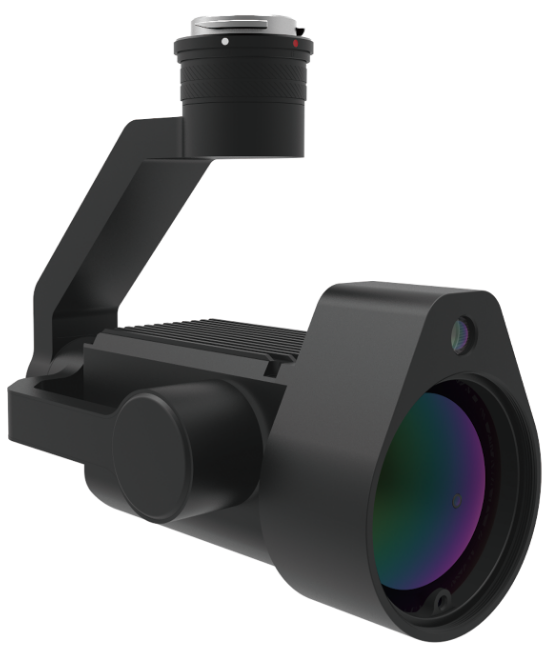
The U10 Laser Methane Leakage Detector uses Tunable Diode Laser Absorption Spectroscopy, or TDLAS, to detect methane remotely.
Its listed specifications include a maximum detection distance of 100 meters, a stationary detection limit of 5 ppm·m and a response time of 25 milliseconds. A built-in visual camera helps the operator relate readings to the inspected area.
The unit suits targeted surveys where remote measurement is useful, including gas pipelines, storage facilities and difficult access points. The quoted distance and sensitivity are specifications, not a guarantee that every leak will be detected under all field conditions.
Sniffer4D V2 Multi-Gas Detection System
The Sniffer4D V2 combines gas sensing with mapping and analysis software. It offers configurable measurement options, including LEL/CH₄, and supports monitoring up to nine gas and particle parameters simultaneously.
It records georeferenced, timestamped concentrations and can generate mission reports and CSV data. This makes it relevant when a survey needs spatial gas measurements or several pollutants monitored together.
Methane capability depends on the installed module. Before specifying the system, confirm the CH₄ sensor’s measurement range, detection limit, response time and output units. A combustible-gas reading expressed as a percentage of the lower explosive limit serves a different purpose from a sensitive methane measurement in ppm.

Inspection requirement | Equipment to consider | Main point to check |
Remote methane screening | U10 | Laser path, working distance and field detection performance |
Gas concentration mapping | Sniffer4D V2 with an appropriate CH₄ module | Sampling method and methane sensitivity |
Monitoring several gases together | Configured Sniffer4D V2 | Which modules are installed and their individual limits |
Aircraft integration depends on the specific sensor model and version. For example, the Sniffer4D Nano 2 Plus, available in a dedicated methane-sensing version, supports Matrice 4E/4T and Matrice 400 integration, while MetScan supports the Matrice 350 RTK and Matrice 400.

Detecting a leak and measuring its size are different tasks
A methane alarm answers whether gas was detected. Quantification estimates how much methane is being emitted, commonly in kilograms per hour.
The units help explain the distinction:
- ppm describes methane concentration in sampled air.
- ppm·m describes concentration integrated along an optical path.
- kg/h describes an emission rate.
For a simplified uniform gas layer, 10 ppm across 5 meters gives the same 50 ppm·m as 50 ppm across 1 meter. Neither reading alone gives the leak rate.
Drone-based quantification typically needs concentration measurements, wind information and an appropriate calculation method. Research on measurement uncertainty shows why flight coverage and simultaneous wind data matter.
Building a useful methane inspection workflow
A practical survey plan should connect each detection to a follow-up decision.
- Define the deliverable. Decide whether the task is screening, source localization, gas mapping or emission-rate estimation. Specify the required data and acceptance criteria.
- Plan around the sensor and site. Consider wind, obstructions, access, operating conditions and equipment layout. A laser needs a suitable measurement path; a sampling sensor needs to encounter representative air.
- Record context with each anomaly. Keep timestamps, coordinates, readings, units, weather observations and visual references. Distinguish the aircraft’s position from the suspected source location.
- Investigate repeatable signals. Use additional passes or appropriate ground inspection to narrow down the source. Compare findings with known vents and operating activity.
- Document repair and recheck. Record the corrective action and conduct a follow-up inspection under suitable conditions. Keep both records linked to the same asset.
Turning methane measurements into repairs
The useful outcome is a finding that the maintenance team can investigate, resolve and recheck. Choose equipment around that sequence and the evidence each stage requires.
Explore Aeromotus’s U10 and Sniffer4D V2 product pages to compare remote methane detection with configurable gas monitoring. When discussing a configuration, provide the asset type, existing aircraft, target detection performance and required report format. Those details help define a system that fits the inspection.
FAQ
Can drones detect methane leaks?
Yes, when equipped with a suitable methane sensor. Depending on the payload, they can detect methane remotely with a laser or measure gas in sampled air.
Which sensor is used for drone methane detection?
Options include TDLAS laser detectors and methane-capable air-sampling instruments. U10 is a remote laser detector; Sniffer4D V2 offers configurable gas measurement options.
How far away can a methane detection drone detect gas?
The U10 lists a maximum detection distance of 100 meters. Actual performance depends on the sensor, measurement geometry and field conditions.
Can a drone measure methane emissions in kg/h?
A suitably equipped and validated system can estimate emission rates. Concentration readings alone are insufficient; quantification requires additional measurements and analysis.
Do drones replace ground methane inspections?
They can extend survey coverage and help target follow-up work. Ground inspection remains useful for confirming individual leaking components and checking repairs.